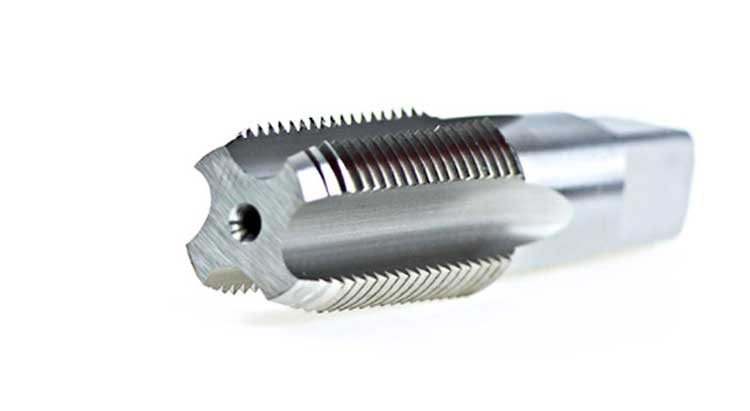
When you're dealing with plumbing, fluid systems, or any component that requires a sealed connection between pipes, you'll eventually need a pipe tap. But for those outside the world of machining or fabrication, this tool can seem confusing. So—what exactly is a pipe tap used for, and how is it different from other taps?
In this guide, we’ll break down the purpose of a pipe tap, where it's used, what types are available, and how to choose the right one for your job. If you're in manufacturing, mechanical repair, or just sourcing reliable threading tools, this article will point you in the right direction.
What Is a Pipe Tap?
A pipe tap is a cutting tool used to cut internal threads in a pre-drilled hole, specifically to accept tapered pipe threads. These threads are commonly found in systems that carry liquids or gases, where leak-tight sealing is critical.
Unlike machine screws or metric bolts—which use straight threads—pipe threads are tapered to allow the male and female parts to wedge together and create a seal. A pipe tap helps create the female side of that thread inside a hole.
What Is a Pipe Tap Used For?
✅ 1. Threading Pipe Connections
The most common use of pipe taps is to cut threads for joining pipes or fittings. You’ll find them in:
Plumbing systems
Air compressors and gas lines
Hydraulic and pneumatic equipment
Oil and gas applications
HVAC systems
They are used both in initial manufacturing and in field repairs or retrofits.
✅ 2. Creating Leak-Tight Joints
Because pipe threads are tapered (usually 1° 47′), when the male and female parts are tightened together, the threads compress and form a mechanical seal. This is essential for high-pressure or fluid-transfer systems.
Pipe taps ensure the internal threads match the exact taper and depth required for sealing.
✅ 3. Repairing Damaged Threads
In maintenance work, pipe taps are often used to:
Chase and clean damaged threads in fittings or housings
Re-thread or restore stripped connections
Tap oversized threads after drilling out broken fittings
This makes them essential in workshops, machine repair centers, and utility field services.
Common Types of Pipe Taps
1. NPT (National Pipe Taper) Tap
The most common standard in North America. Threads are tapered and designed to seal with PTFE tape or thread sealant.
Used for air, gas, water, and hydraulic lines
Thread taper: 1 in 16 (¾″ per foot)
2. NPTF (Dryseal) Tap
Similar to NPT but designed for metal-to-metal seal without needing sealant. Used in hydraulics or high-pressure systems.
Produces tighter threads to eliminate spiral leakage
Often used in industrial equipment
3. BSPT (British Standard Pipe Taper) Tap
Used in countries following British standards. Not interchangeable with NPT threads.
Common in Europe and parts of Asia
Same taper concept, different thread profile and pitch
How to Choose the Right Pipe Tap
When selecting a pipe tap, consider:
| Factor | What to Look For |
|---|---|
| Thread standard | NPT, NPTF, or BSPT—based on your region/system |
| Material | Use high-speed steel (HSS) or cobalt for metal tapping |
| Size | Match the tap size to the pipe nominal size (e.g., 1/4", 1/2", etc.) |
| Taper vs. straight | Make sure it's a taper pipe tap, not a straight-thread tap |
| Thread class | Choose appropriate fit tolerance if tight seal is critical |
Also, check if you need a bottoming, plug, or taper-style tap:
Taper tap: Best for starting new threads
Plug tap: General-purpose, starts easily and finishes threads
Bottoming tap: Used when threading to the bottom of a blind hole
Application Tips
Drill the correct tap hole size – Undersized holes will break the tap; oversized holes won’t hold a seal
Use thread cutting fluid – Helps reduce friction and heat, extending tap life
Use a tap wrench – Keeps alignment straight and pressure even
Go slowly – Especially in stainless steel or harder metals
Back off periodically – To clear chips and avoid binding
We Provide High-Quality Pipe Taps for Industrial and Workshop Use
At Amony, we manufacture and supply:
NPT, NPTF, and BSPT taper pipe taps
Solid HSS and cobalt options
Metric and inch sizes from 1/16" to 2"
Custom and OEM private label services available
Contact us now for catalogs, samples, or application-specific recommendations.